
7 Days Tour from Fes to Merzouga Desert 3 Nights Desert Camp with Astronomy Experiences
OVERVIEW OF THE 7 Days Tour from Fes to Merzouga Desert 3 Nights Desert Camp with Astronomy Experiences :
Morocco occupies a uniquely advantageous position for astronomical observation, both geographically and climatically. Situated at approximately 30° north latitude, the country offers a rare celestial vantage point: it allows visibility of both northern constellations and selected elements of the southern celestial hemisphere that remain inaccessible in much of Europe. Combined with the arid conditions of the Saharan regions and an exceptional rate of clear nights throughout the year, the Moroccan desert becomes a natural observatory of remarkable quality.
This 7-day journey from Fes to the Merzouga desert and back is designed to transform this natural advantage into a structured and immersive experience. Rather than presenting astronomy as a secondary activity, the itinerary places it at the very core of the journey, integrating scientific observation, cultural interpretation, and environmental awareness.
Departing from the intellectual capital of Fes, the route crosses the Middle Atlas Mountains, where cedar forests, alpine landscapes, and changing climates introduce a gradual transition toward the desert. As the journey continues southward, geological formations reveal a prehistoric past marked by marine fossils and ancient sedimentary layers, offering a tangible link between Earth’s history and the cosmic timeline explored at night.
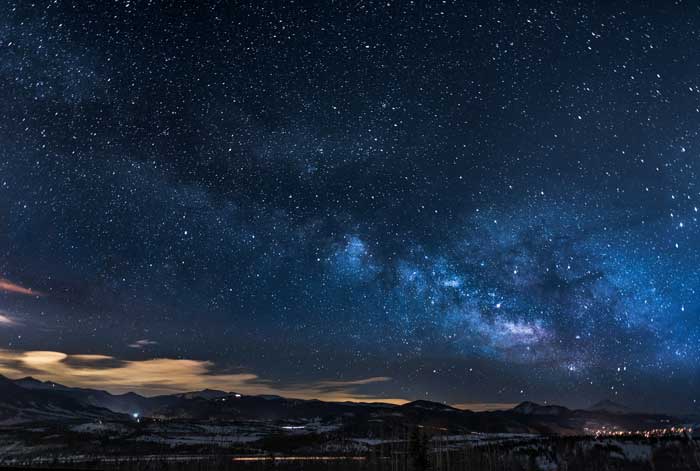
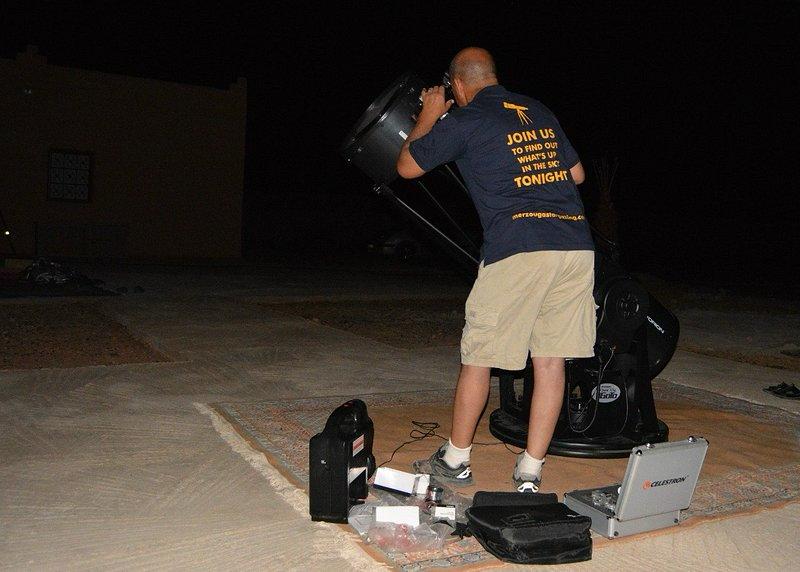
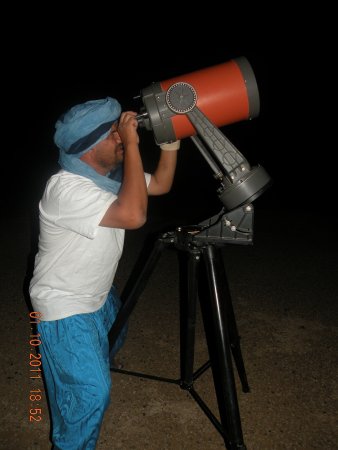
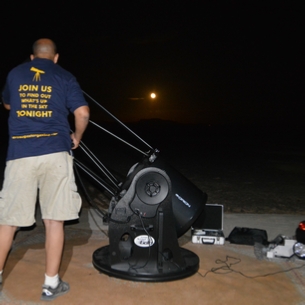
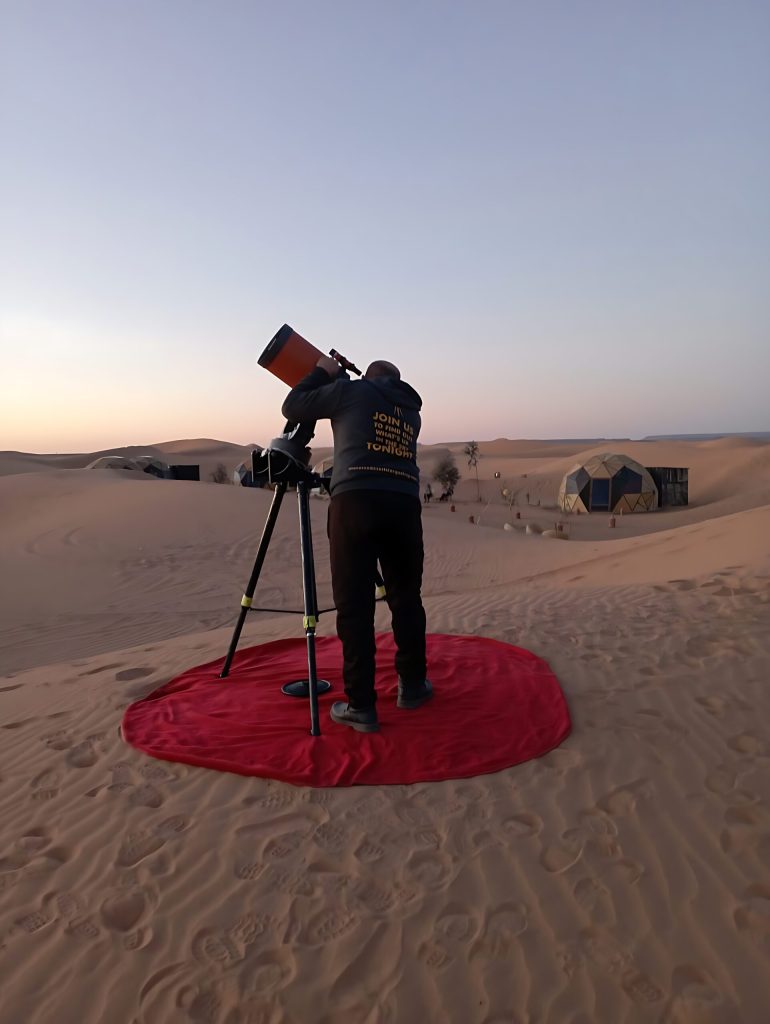
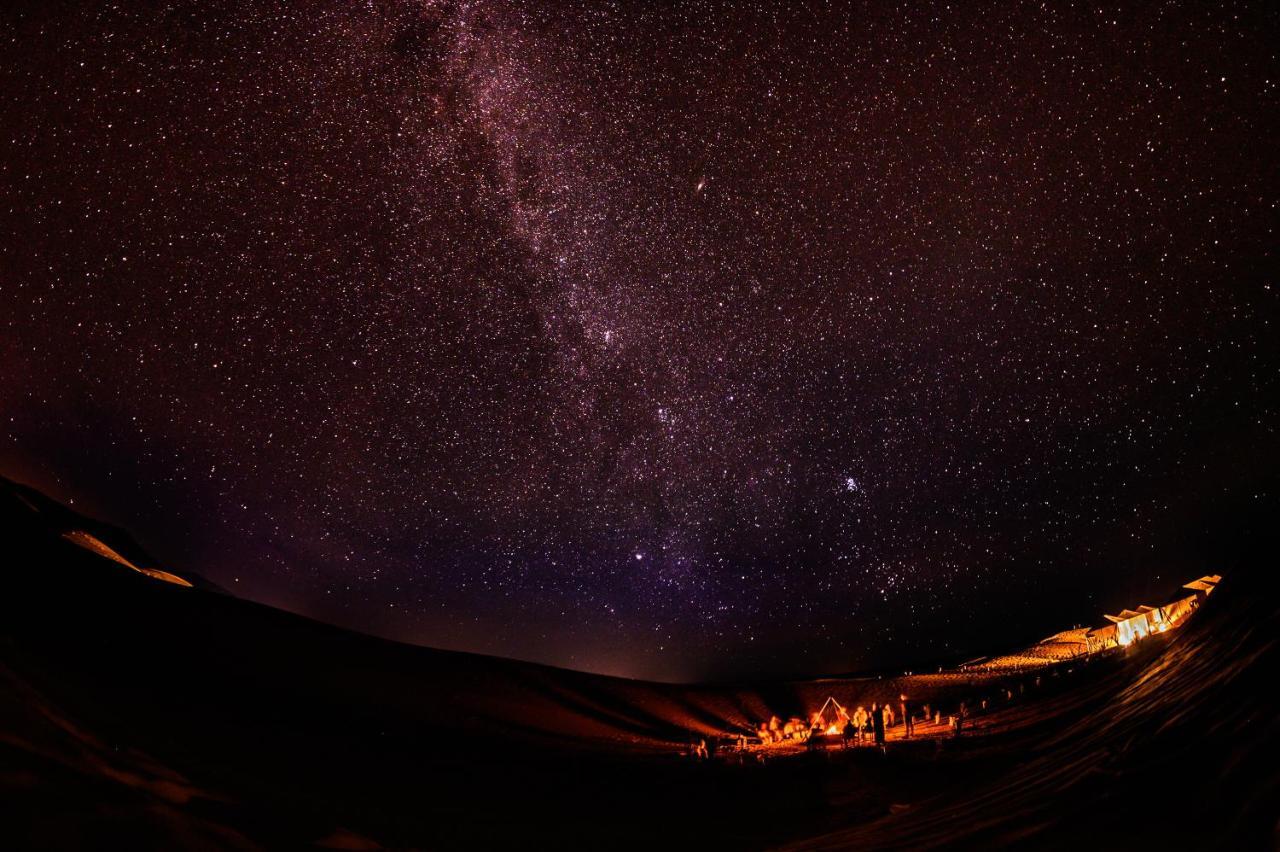
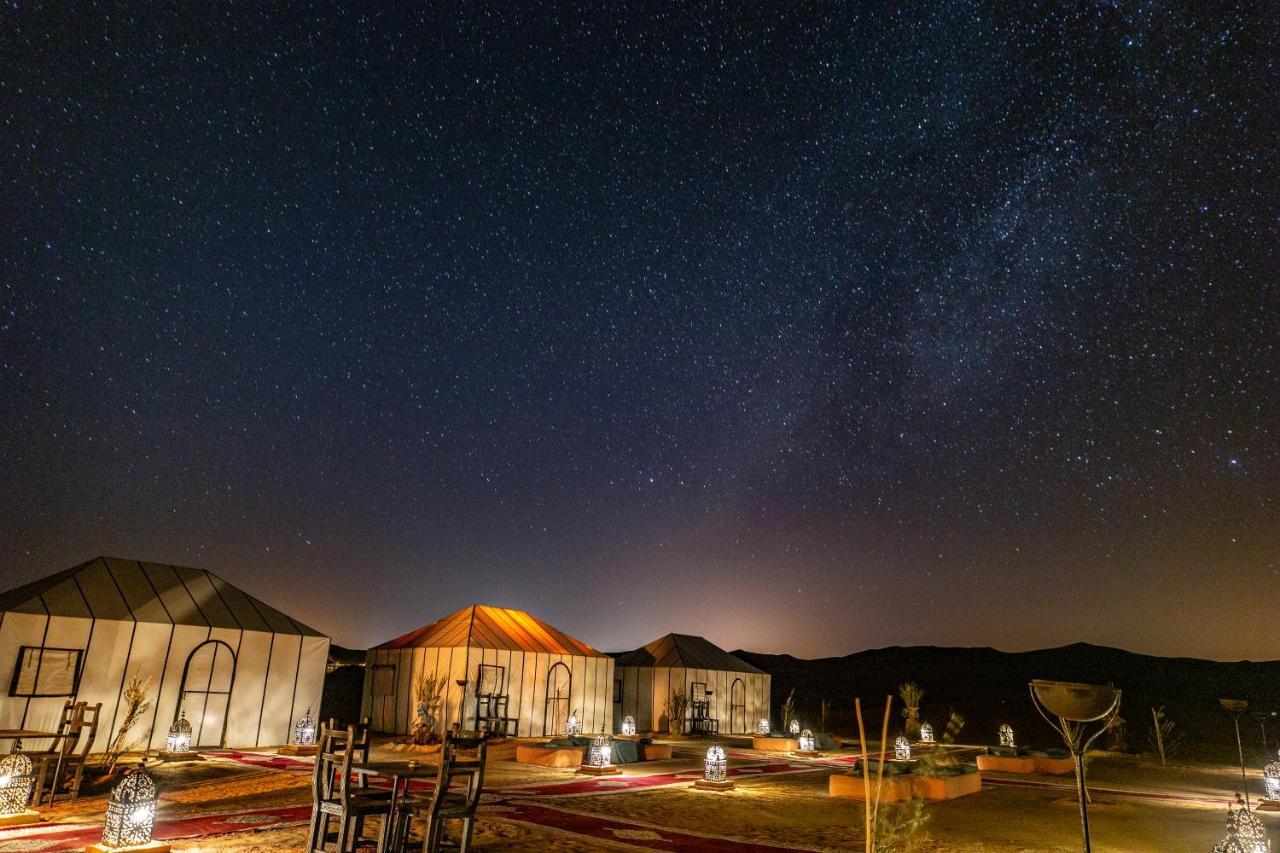
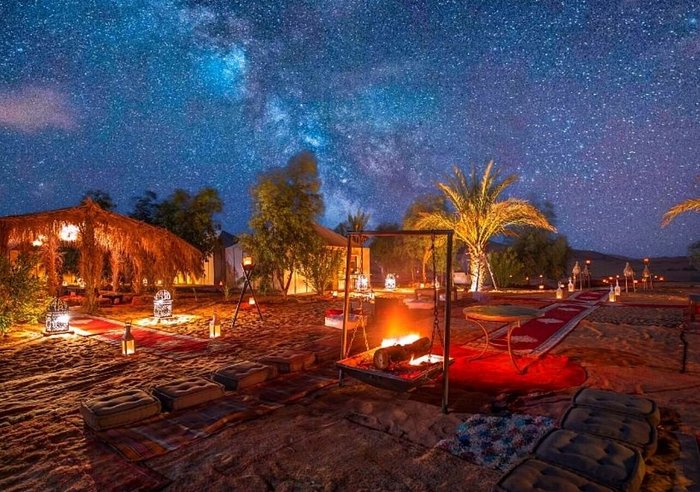
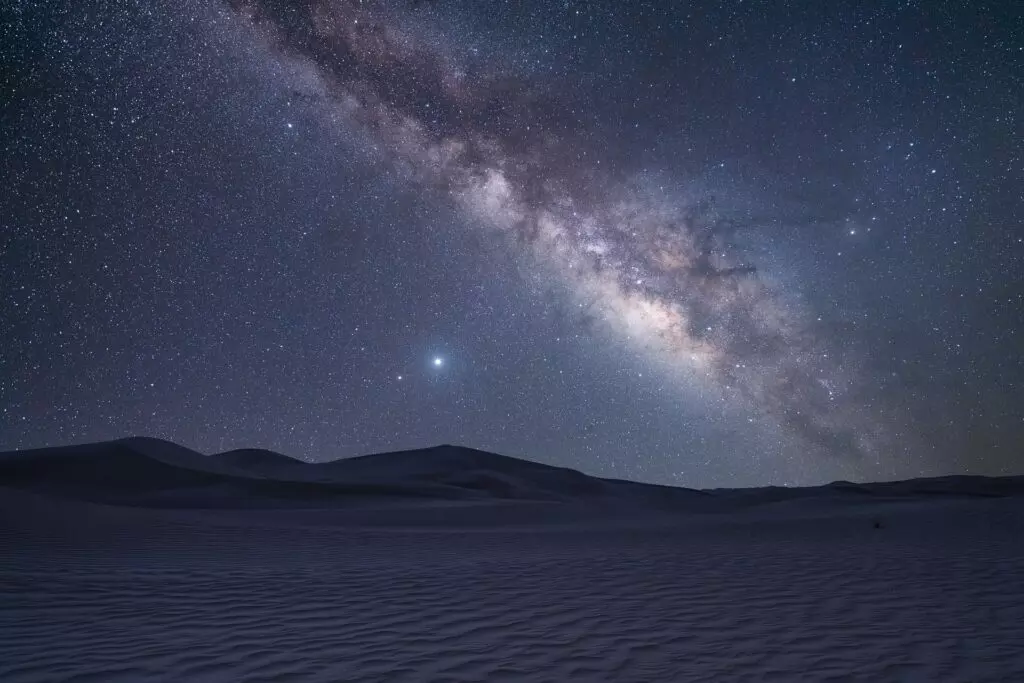
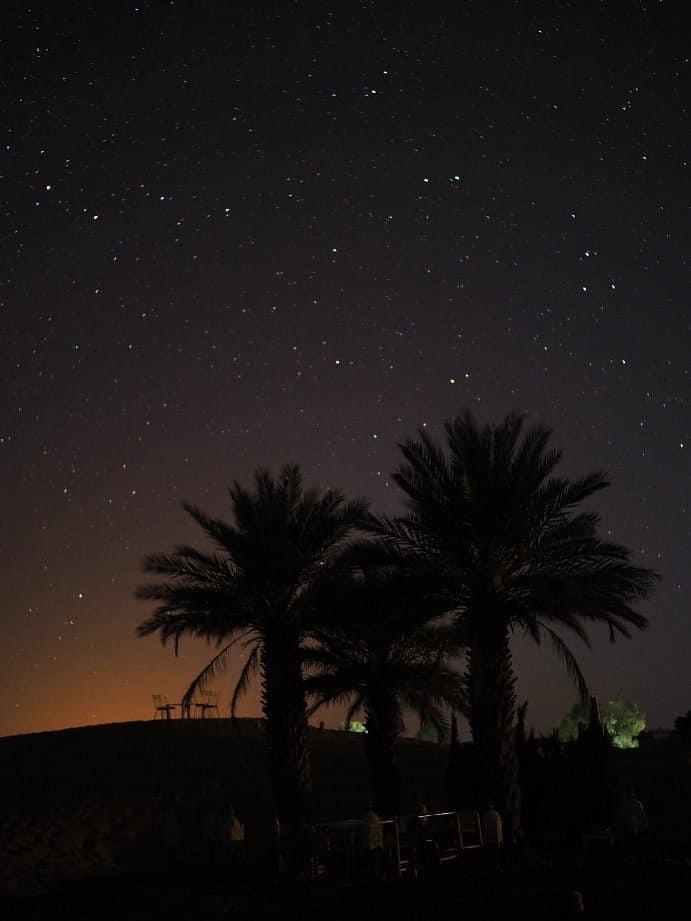
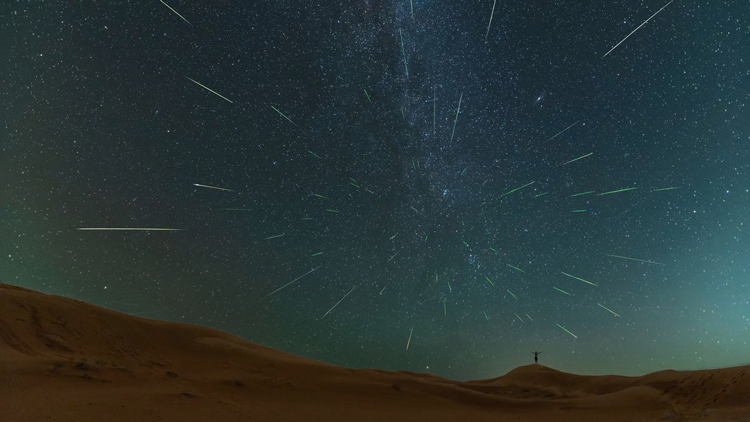
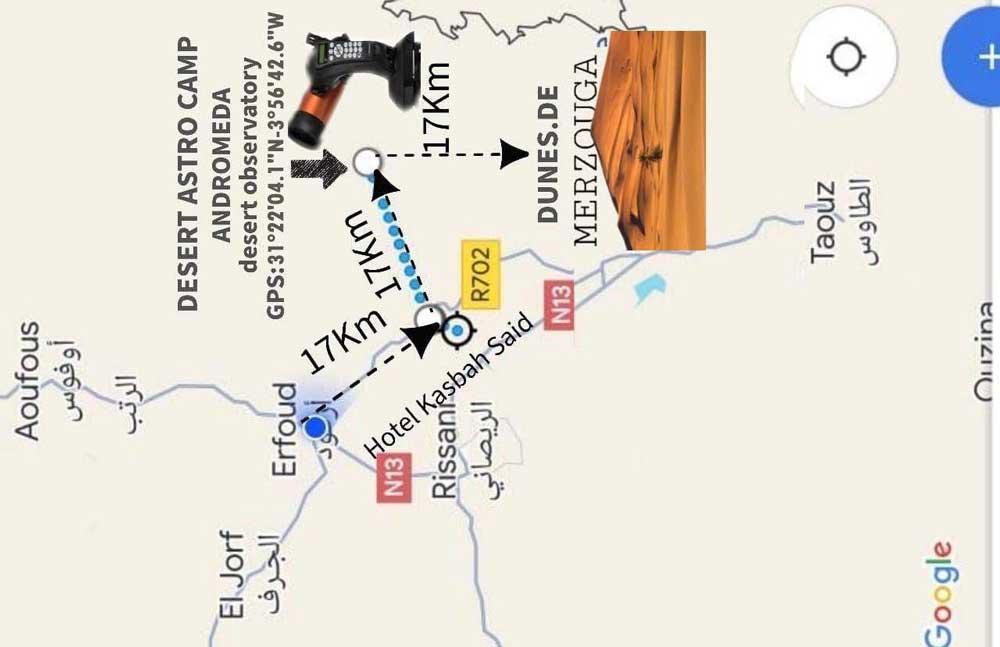
The heart of the experience unfolds in the Erg Chebbi dunes near Merzouga, where you will spend three consecutive nights in a desert camp fully dedicated to astronomical exploration. Far removed from artificial light sources, the Sahara sky reveals an extraordinary clarity, making it possible to observe celestial bodies such as Saturn’s rings, distant galaxies like Andromeda, and seasonal meteor activity with exceptional precision.
Through guided telescope sessions, interpretive lectures, and cultural narratives rooted in Berber, Bedouin, and Tuareg traditions, participants gain a multidimensional understanding of the sky, bridging science, mythology, and human history.
This itinerary is therefore conceived not simply as a tour, but as a journey across landscapes, time, and the universe itself, where each day prepares the ground for the profound experience of the night.
Highlights of the 7 Days Tour from Fes to Merzouga Desert 3 Nights Desert Camp with Astronomy Experiences :
- Crossing the Middle Atlas Mountains and cedar forests
- Observation of Barbary macaques in their natural habitat
- Geological exploration and fossil discovery in Erfoud region
- Camel trekking experience across the dunes of Erg Chebbi
- Three nights in a Sahara desert camp focused on astronomy
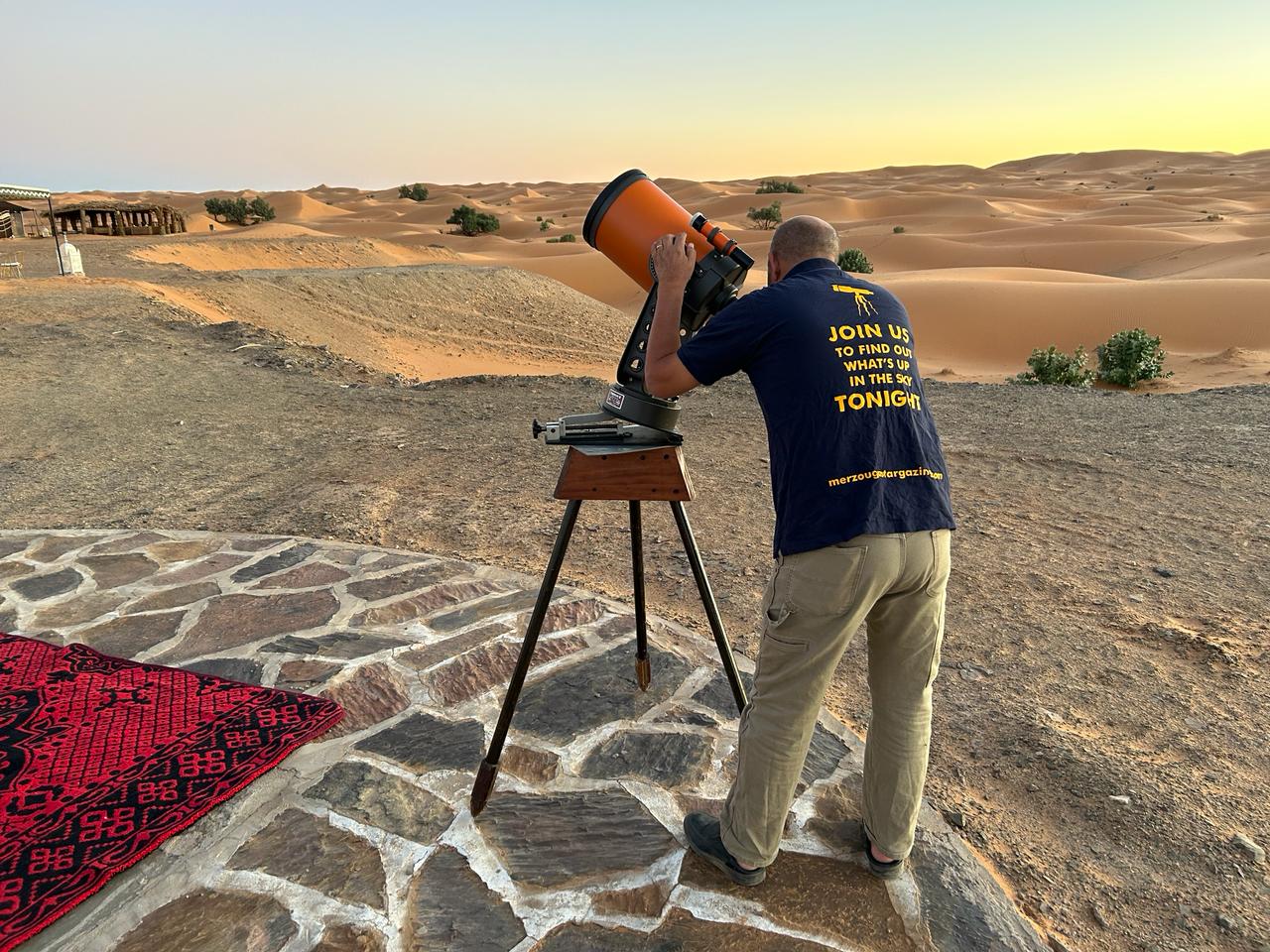
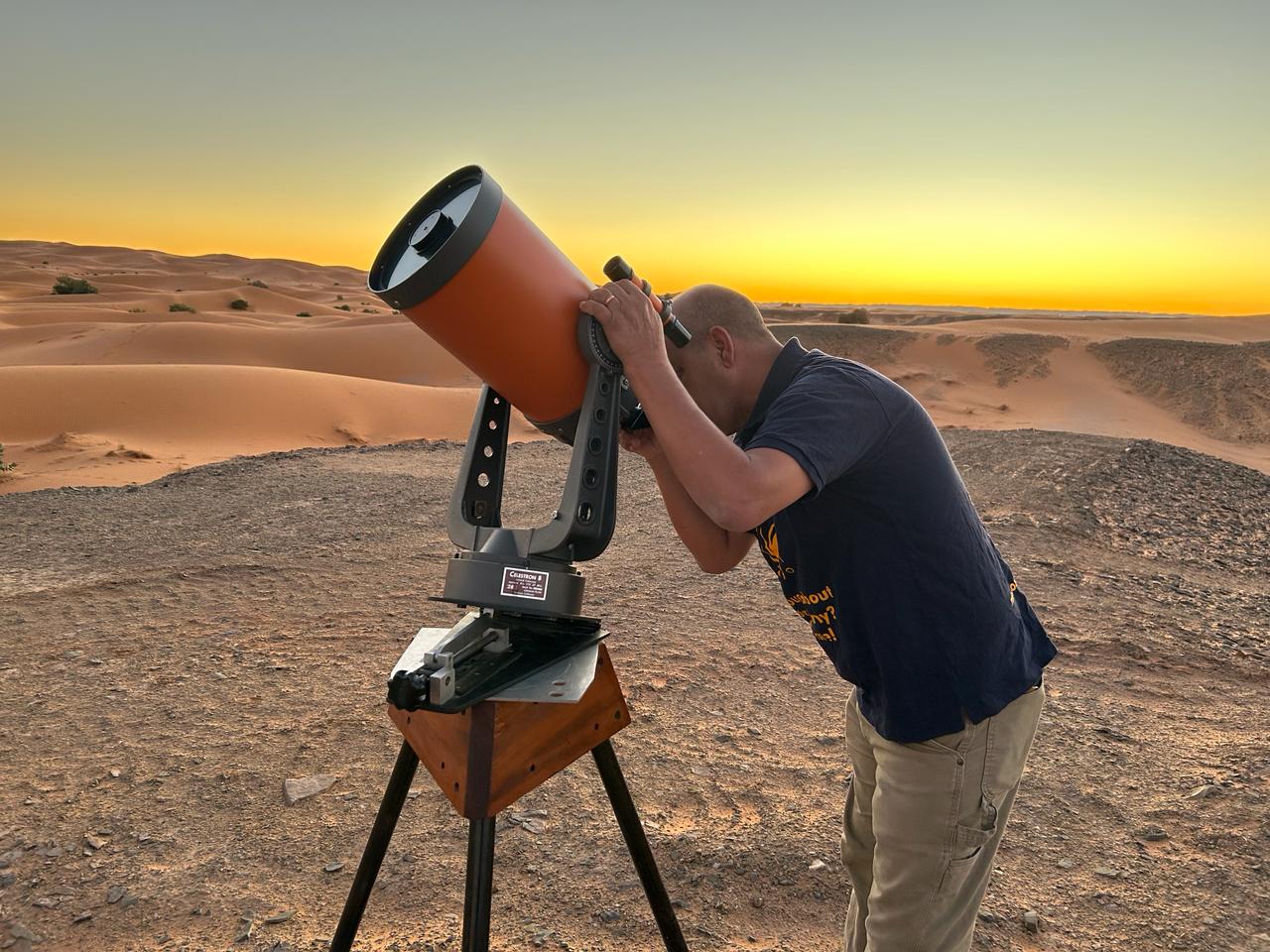
- Telescope observation of planets, galaxies, and star clusters
- Interpretation of constellations and celestial navigation traditions
- Cultural immersion with local communities and Gnaoua musical heritage
- Exploration of the historic Sijilmassa and Tafilalet region
- Unique opportunity to observe the Milky Way and deep-sky objects under pristine conditions
ITINERARY of the 7 Days Tour from Fes to Merzouga Desert 3 Nights Desert Camp with Astronomy Experiences
Day 1: Fes → Middle Atlas → Ifrane → Midelt → Erfoud
Departure from Fes in the morning initiates a progressive transition from urban density to mountainous serenity. The route leads through the Middle Atlas, where cedar forests dominate the landscape.
A stop in Ifrane National Park allows observation of Barbary macaques in their natural environment, an unexpected encounter in a region more often associated with desert imagery. Continuing through Midelt, the terrain gradually becomes more mineral and expansive.
By evening, arrival in Erfoud, a town known for its proximity to fossil deposits and desert gateways. Overnight in a hotel under a half-board arrangement. As night falls, the first clear views of the Saharan sky begin to emerge, offering an introduction to the astronomical dimension of the journey.
Day 2: Erfoud → Geological Exploration → Merzouga Desert (Camp Night 1)
The day begins with a geological exploration of the Erfoud region, where ancient seabeds have preserved fossils dating back hundreds of millions of years. Participants may engage in a hands-on fossil discovery experience, revealing trilobites and other prehistoric remains.
In the afternoon, arrival at the edge of the Erg Chebbi dunes marks the transition into the Sahara. A camel trek at sunset leads you into the desert camp, where shifting light transforms the dunes into a spectrum of gold and amber.
After dinner, the first astronomy session introduces the fundamentals of night sky observation. Under exceptionally dark conditions, guides explain constellations, star patterns, and basic celestial orientation.
Day 3: Erg Chebbi Exploration – Culture & Astronomy (Camp Night 2)
This day is dedicated to exploring the wider desert environment. You will traverse the southern dunes, discovering remnants of old mining sites and geological layers that reflect the region’s deep past.
A cultural encounter with a local community provides insight into historical narratives, including trans-Saharan movements and heritage. Traditional tea is shared, followed by an evening of Gnaoua music, whose rhythms carry echoes of African spiritual traditions.
After dinner, a thematic astronomy lecture explores the relationship between the sky and North African cultures, including navigation, mythology, and seasonal cycles as interpreted by Berber, Bedouin, and Tuareg societies.
Day 4: Tafilalet Region – Sijilmassa History & Advanced Stargazing (Camp Night 3)
The day focuses on the historical and intellectual dimension of the desert. You will explore the Tafilalet oasis, once a major centre of trade and scholarship, and learn about Sijilmassa, a key hub in trans-Saharan commerce between the 7th and 12th centuries.
Returning to camp in the afternoon, time is reserved for rest before the most advanced astronomical session of the journey.
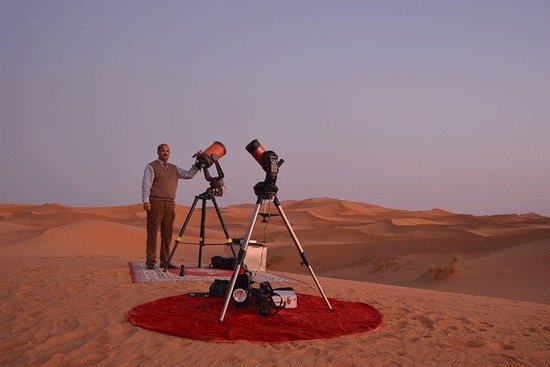
At night, a comprehensive telescope observation session is conducted using professional equipment. Participants observe planets, distant galaxies, nebulae, and star clusters, benefiting from the Sahara’s optimal viewing conditions. This session represents the peak of the astronomical experience.
Day 5: Merzouga → Ziz Valley → Midelt
After witnessing a final desert sunrise, departure from Merzouga begins. The route follows the Ziz Valley, characterized by extensive palm groves and dramatic contrasts between greenery and arid landscapes.
The journey continues north toward Midelt, where the climate becomes cooler and vegetation more abundant. Overnight in Midelt or nearby.
Day 6: Midelt → Middle Atlas → Ifrane → Fes
The return journey crosses once again the Middle Atlas Mountains. Stops along the way allow for reflection on the diversity of landscapes encountered throughout the trip.
Arrival in Fes in the afternoon. Free time to rest or explore the city at your own pace.
Day 7: Fes – Cultural Exploration & Departure
The final day is dedicated to exploring the rich heritage of Fes. A guided visit through the medina reveals its architectural, cultural, and intellectual significance.
This concluding experience reconnects the traveler with Morocco’s historical depth, providing a meaningful closure to a journey that has traversed both terrestrial and celestial landscapes.
Transfer to the airport or end of services.
Gallery
INCLUDE:
- Dinner
- Breakfast
- Pickup and drop-off from Merzouga, Erfoud, Erg Chebbi, or nearby villages
- Camel Trekking Experience in the dunes of Erg Chebbi
- Sunset and Sunrise full experience
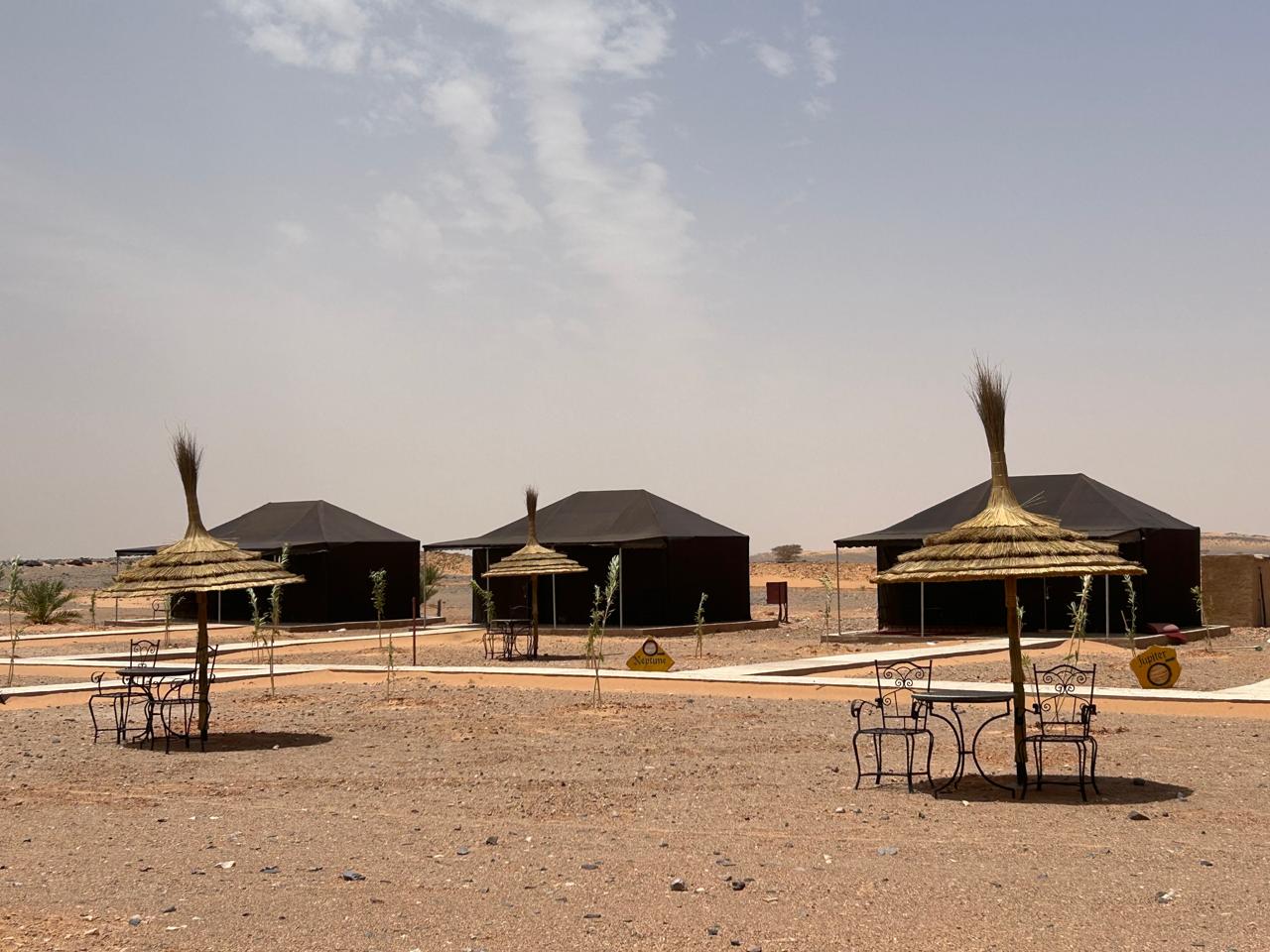
- Luxury desert camp
Excluded :
- Meals
7 Days Tour from Fes to Merzouga Desert 3 Nights Desert Camp with Astronomy Experiences
Know Before You Go – 7 Days Tour from Fes to Merzouga Desert 3 Nights Desert Camp with Astronomy Experiences
Physical Requirements & Travel Conditions :
This journey involves long driving hours, changing terrains, and noticeable climate shifts between the Middle Atlas Mountains and the Sahara Desert. Travelers should be in good general health and comfortable with extended road travel. The camel trekking experience, while memorable, may be physically demanding; however, alternative transport by 4×4 can be arranged if necessary.
Climate & What to Pack :
The tour crosses diverse climatic zones, ranging from the cool and sometimes cold conditions of the Middle Atlas to the intense heat of the desert during the day and cold temperatures at night. It is essential to bring layered clothing, including light outfits for daytime and warm garments for evenings, along with comfortable shoes, sun protection, and a scarf to guard against sun and sand.
Accommodation Standards :
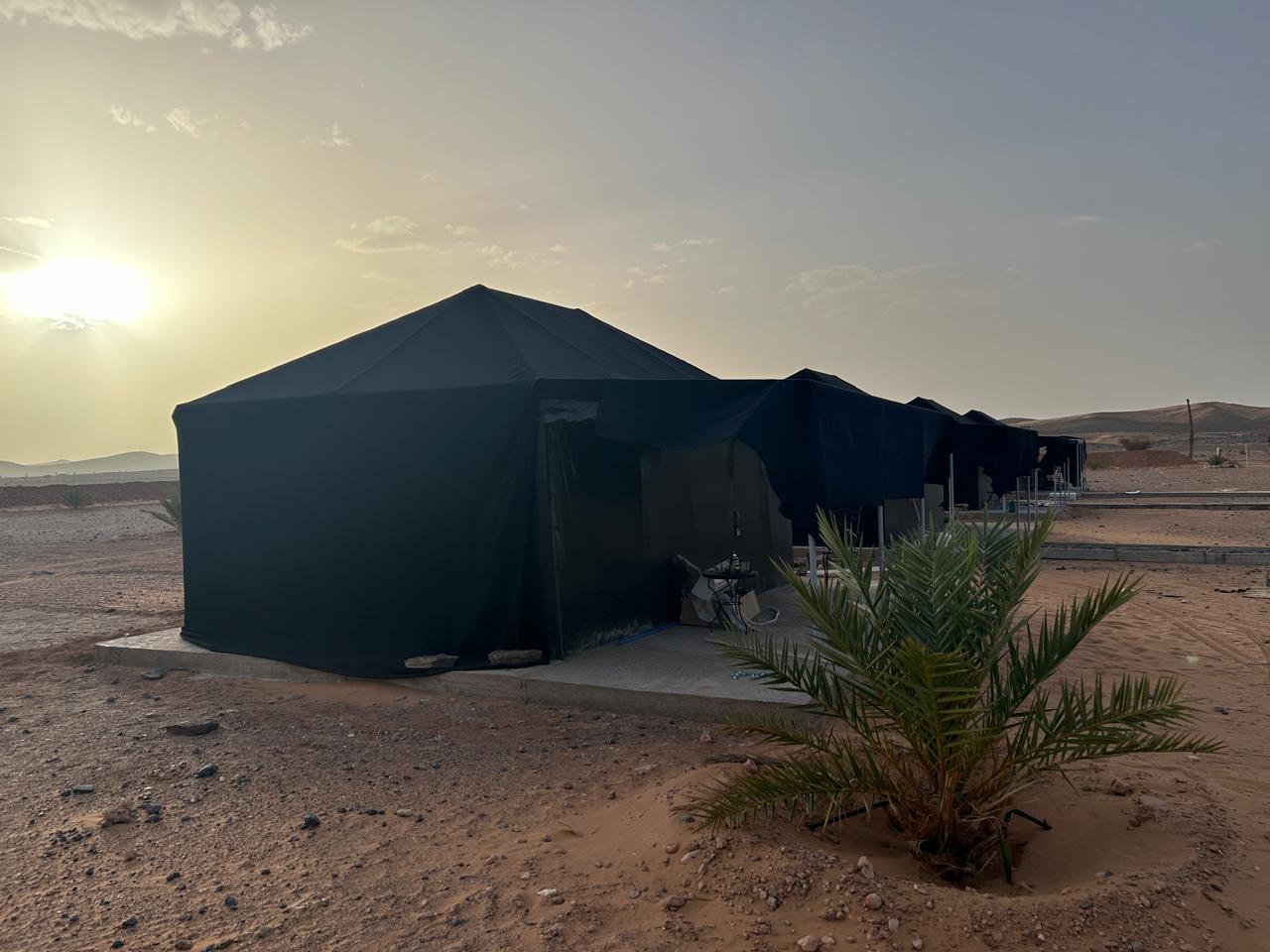
Accommodation throughout the journey includes comfortable hotels in cities and a well-equipped desert camp in Merzouga. Hotels generally offer standard modern amenities, while the desert camp provides a more immersive experience with limited electricity, often powered by solar energy. Charging devices may be possible but not always reliable.
Astronomy Experience Requirements :
No prior knowledge of astronomy is required, as the experience is designed for all levels. Participants should, however, be prepared for extended nighttime observation sessions, which require patience and suitable warm clothing. Clear skies are common but cannot be guaranteed, as observations depend on natural conditions.
Food & Dietary Information :
Meals are typically included and consist of traditional Moroccan cuisine such as tagines, couscous, and soups. Vegetarian options are usually available upon prior request, and any specific dietary needs should be communicated in advance to ensure proper arrangements.
Cultural Considerations :
Morocco’s cultural identity is deeply rooted in tradition and social values. Visitors are encouraged to dress modestly, particularly in rural areas, and to respect local customs. It is also advisable to seek permission before photographing individuals, as a sign of courtesy and respect.
Connectivity & Communication :
Internet access is available in most hotels but may be limited in speed and reliability. In the desert camp, connectivity is minimal to nonexistent, offering a rare opportunity to disconnect from digital distractions and fully engage with the environment.
Health & Safety :
Travelers are advised to stay well hydrated, especially in desert conditions, and to carry basic personal medication if needed. While the tour is generally safe, having travel insurance is strongly recommended to cover any unforeseen circumstances.
Best Time to Travel :
The tour operates throughout the year, though the most comfortable periods are during spring and autumn, when temperatures are moderate. Summer can be extremely hot in the desert, while winter nights may be quite cold, making seasonal preparation important.
Important Notes :
The itinerary may be subject to minor adjustments due to weather or logistical factors. Stargazing quality depends on atmospheric conditions, and participants are encouraged to respect the natural environment by minimizing their ecological impact throughout the journey.
(FAQs) 7 Days Tour from Fes to Merzouga Desert 3 Nights Desert Camp with Astronomy Experiences
1. What is included in the tour package?
The package includes accommodation, meals (usually half-board), desert transportation, guided fossil hunting excursions, and all planned cultural and sightseeing activities. Airport transfers may be arranged upon request.
2. What should I pack for the tour?
Travelers should bring comfortable walking shoes, layered clothing for hot days and cool nights, a hat, sunglasses, sunscreen, a reusable water bottle, and any personal medication. Gloves and small tools for fossil hunting are often provided by the guides.
3. Is prior experience in fossil hunting required?
No prior experience is necessary. Our guides provide full instructions and assist participants in identifying and handling fossils safely.
4. What kind of fossils will I see?
Participants can expect to find a variety of prehistoric marine fossils, including ammonites, trilobites, and other ancient remains dating back hundreds of millions of years.
5. Are there any age restrictions for participants?
The tour is generally suitable for all ages, but children under 10 should be accompanied by an adult. The tour requires some walking and moderate physical activity.
6. How strenuous is the fossil hunting activity?
The activity involves walking on desert terrain, bending, and light digging. It is considered moderate in intensity, and participants can take breaks as needed.
7. How is the accommodation during the tour?
Accommodation is in desert-friendly lodges or camps, offering basic comfort with private or shared rooms, clean facilities, and traditional Moroccan hospitality.
8. Is it safe to travel in the desert?
Yes. The tour is conducted by experienced guides who are familiar with desert terrain. Travelers are advised to stay hydrated, follow safety instructions, and wear appropriate clothing for sun and sand protection.
9. What meals are provided during the tour?
The tour typically includes breakfast, lunch, and dinner, featuring traditional Moroccan cuisine such as tagines, couscous, and local specialties. Special dietary requests can usually be accommodated with prior notice.
10. Will there be opportunities to interact with local communities?
Yes. The tour includes visits to nearby villages and interactions with local communities, providing insight into Berber culture and desert life.
11. Can I take the fossils home?
Some small fossils may be taken home as souvenirs. However, large or protected specimens should remain in place to preserve the local heritage.
12. When is the best time to take this tour?
The ideal months are spring (March–May) and autumn (September–November), when desert temperatures are moderate. Summer can be extremely hot, while winter nights may be very cold.
Phone
+212-621-218-521
moroccoastrotours@gmail.com
Adress
Oasis Laaouina Merzan Rissani 52450 Morocco
contact us
book your tour now
atlas geo tours