
2026’s Most Noteworthy Celestial Events in Morocco
2026 promises to be a spectacular year for stargazers and astronomy enthusiasts, and Morocco’s clear skies make it the perfect place to witness these celestial wonders. From dazzling meteor showers streaking across the Sahara Desert to rare lunar and solar eclipses illuminating the night, the year ahead is filled with unforgettable astronomical events. Whether you’re an experienced astronomer with a telescope or simply someone who loves to gaze at the stars, Morocco offers a unique backdrop of mountains, deserts, and rural landscapes that bring the universe closer to home. In this guide, we’ll highlight the most noteworthy celestial events of 2026 and show you where and how to experience them in Morocco.
Major Celestial Events in 2026
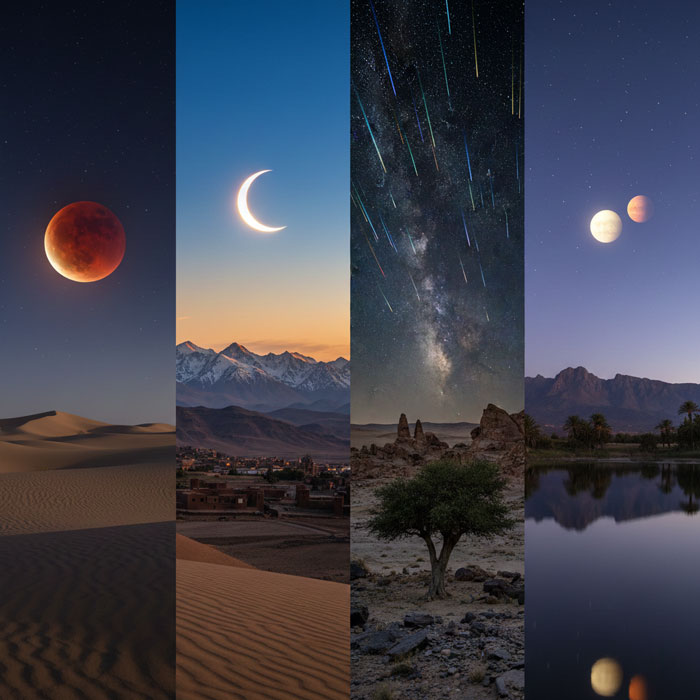
2026 is shaping up to be an exciting year for astronomy lovers, with a variety of events lighting up Morocco’s skies. From eclipses to meteor showers and rare planetary alignments, there’s something for every stargazer. Here’s what you can look forward to:
1. Lunar Eclipses
Lunar eclipses are always a mesmerizing sight, and in 2026, Morocco will have the opportunity to witness a few spectacular ones. The blood-red glow of a total lunar eclipse can be seen with the naked eye, making it accessible to everyone. Best viewing spots include high-altitude areas or open desert landscapes, where the horizon stretches uninterrupted. Remember to check the exact local times for peak visibility to catch the full spectacle.
2. Solar Eclipses
Although solar eclipses are less frequent, they offer a breathtaking experience for those prepared. In 2026, Morocco may witness partial solar eclipses that require proper eye protection for safe viewing. The Sahara Desert and rural regions with clear skies are ideal for observing this rare event. Solar viewing glasses or solar filters for cameras and telescopes are a must, never look directly at the sun without protection.
3. Meteor Showers
Meteor showers bring dynamic, fleeting beauty to the night sky, and Morocco’s dark, low-light regions make them even more magical. Some of the highlights in 2026 include the Perseids, Geminids, and Quadrantids. For the best experience, head to remote desert areas like Merzouga or the Atlas Mountains. Lie back, relax, and enjoy dozens of shooting stars streaking across the sky. Apps or star maps can help identify constellations and meteor origins.
4. Planetary Alignments and Conjunctions
2026 will also feature several interesting planetary alignments and conjunctions, where planets appear unusually close together in the sky. These events provide excellent opportunities for photography and are particularly striking in Morocco’s open landscapes. Keep an eye out for Venus, Mars, and Jupiter forming stunning patterns, especially just after sunset or before dawn.
5. Special Astronomical Phenomena
Beyond eclipses and showers, 2026 may bring rare celestial events such as visible comets or unusual planetary movements. These fleeting phenomena are often unpredictable, making Morocco’s clear skies an ideal vantage point to catch them. Following astronomy news sources and local observatories can ensure you don’t miss any surprises.
Top Stargazing Spots in Morocco
Morocco’s diverse landscapes offer some of the best stargazing opportunities in the world. From vast deserts to high mountains, here are the top spots to catch 2026’s celestial events:
1. Sahara Desert
The Sahara Desert, especially around Merzouga and Erg Chebbi, is a stargazer’s paradise. With almost zero light pollution and wide-open horizons, the desert offers uninterrupted views of the night sky. Imagine watching meteor showers streak across the sky while surrounded by towering dunes, a truly magical experience. For a more immersive experience, consider a desert camp under the stars.
2. Atlas Mountains
The High Atlas Mountains provide elevated locations that often rise above clouds and haze, giving clearer views of celestial events. Areas near Toubkal National Park or the Oukaimeden Observatory are perfect for observing eclipses, meteor showers, and planetary alignments. Many local guides offer astronomy tours that combine hiking and stargazing.
3. Rural and Remote Areas
Even outside the deserts and mountains, Morocco’s rural towns and villages are excellent for night sky observation. Places far from city lights, such as the Anti-Atlas region or small villages in the Draa Valley, provide peaceful, dark skies perfect for spotting shooting stars and planets.
4. Local Observatories and Astronomy Tours
Morocco is home to some professional and semi-professional observatories, like the Oukaimeden Observatory, which sometimes hosts public stargazing nights. Joining local astronomy tours or workshops not only provides access to telescopes but also expert guidance to fully appreciate the sky’s wonders.
Tip: Always check the weather forecast, aim for nights with clear skies, and avoid full moon nights for the best stargazing experience.
Ready to witness the wonders of Morocco’s night sky?
Tips for an Unforgettable Skywatching Experience
Watching the night sky in Morocco can be a breathtaking experience, especially when you’re prepared. Here are some tips to help you make the most of 2026’s celestial events:
1. Choose the Right Time
- Night hours: The best time for stargazing is typically after midnight when the sky is darkest.
- Moon phases: Try to plan around a new moon for clearer skies, as a full moon can wash out fainter stars and meteor showers.
- Check visibility: Use astronomy apps or websites to know the peak times for eclipses, meteor showers, or planetary alignments.
2. Pick the Best Location
- Look for areas far from city lights, such as deserts, mountains, or remote rural areas.
- Avoid locations with street lighting or nearby settlements to reduce light pollution.
- Find open spaces with a clear horizon for the best panoramic views of celestial events.
3. Bring the Right Gear
- Telescopes or binoculars: Great for observing lunar craters, planets, and distant stars.
- Star charts or apps: Helpful to identify constellations, planets, and meteor origins.
- Camera equipment: Long exposure photography can capture stunning images of meteor showers or eclipses.
- Comfort essentials: Blankets, camping chairs, and warm clothing for desert or mountain nights.
4. Safety and Comfort Tips
- Always stay hydrated, especially in desert regions.
- Dress in layers; temperatures drop significantly at night, even in the desert.
- Let someone know your location if venturing into remote areas.
- Respect the environment and local communities while observing the sky.
5. Consider Guided Experiences
- Join local astronomy tours or observatory events for expert guidance.
- Some tours combine stargazing with cultural experiences, such as Berber tea in the desert or mountain camping.
- Guided trips ensure you won’t miss rare events and provide access to telescopes and photography tips.
Experience Morocco’s 2026 Skies
2026 is shaping up to be a spectacular year for anyone fascinated by the night sky, and Morocco offers some of the most breathtaking vantage points in the world. From dazzling meteor showers streaking across the Sahara to rare lunar and solar eclipses illuminating the mountains, every celestial event becomes unforgettable when experienced under Morocco’s clear, dark skies. Whether you’re a seasoned astronomer or simply someone who loves to marvel at the stars, Morocco provides the perfect combination of natural beauty, tranquility, and accessibility to make your skywatching adventure truly memorable.